Help Isom IGA recover from devasting floods
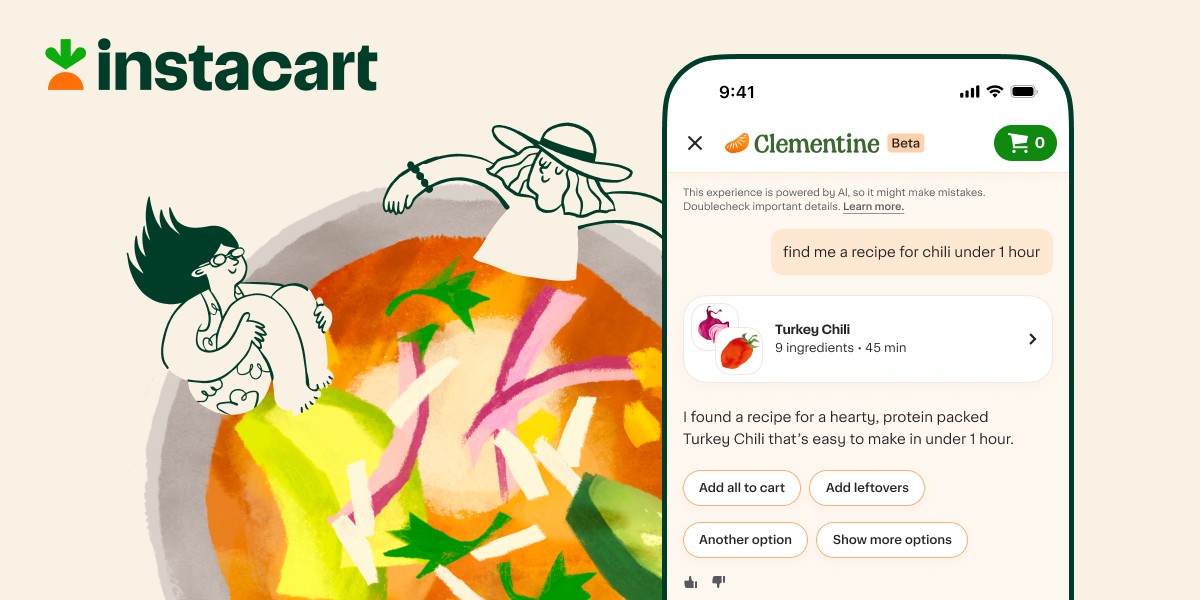
In September 2026, Instacart introduced Clementine, an AI-powered shopping assistant now available to millions of customers across the U.S. and Canada on the Instacart Marketplace, and Cart Assistant, an enterprise-level extension of that same technology for grocery retailers to deploy on their own eCommerce sites. These launches reflect more than 14 years of grocery-specific expertise Instacart has built — and a clear conviction that AI’s role in grocery is here.
The consumer pain points driving Clementine
An Instacart-commissioned survey conducted by The Harris Poll found that more than 80% of Americans say figuring out what to make for dinner causes them stress. Nearly a third say the hardest part isn't the cooking itself, but actually deciding what to make — and more than two in three say they'd be interested in an AI-powered assistant to help, yet only 8% currently use one.¹
Designed around the idea that the right technology, deployed in the right way, can take the stress out of the weekly shop, Clementine bridges the gap between consumer interest and actual adoption.
Turning conversations into carts
Now available to customers across the U.S. and Canada on the Instacart Marketplace, Clementine turns a conversation, grocery list, or recipe into a personalized cart in seconds. Customers interact with the AI shopping assistant in natural language—describing what they want to cook, uploading a photo of a handwritten grocery list, identifying savings, or planning for a specific occasion—and Clementine helps them build a complete, ready-to-buy cart based on live inventory from their preferred store.
What sets Clementine apart is its foundation: over 1.6 billion lifetime orders, a catalog of more than 2 billion items, and more than 10 million daily inventory signals from nearly 100,000 stores across more than 2,200 retail banners in North America.2 That depth of data means Clementine understands what's on store shelves in real time, how families actually eat, what they buy week after week, and what's on sale at their store at any given moment.
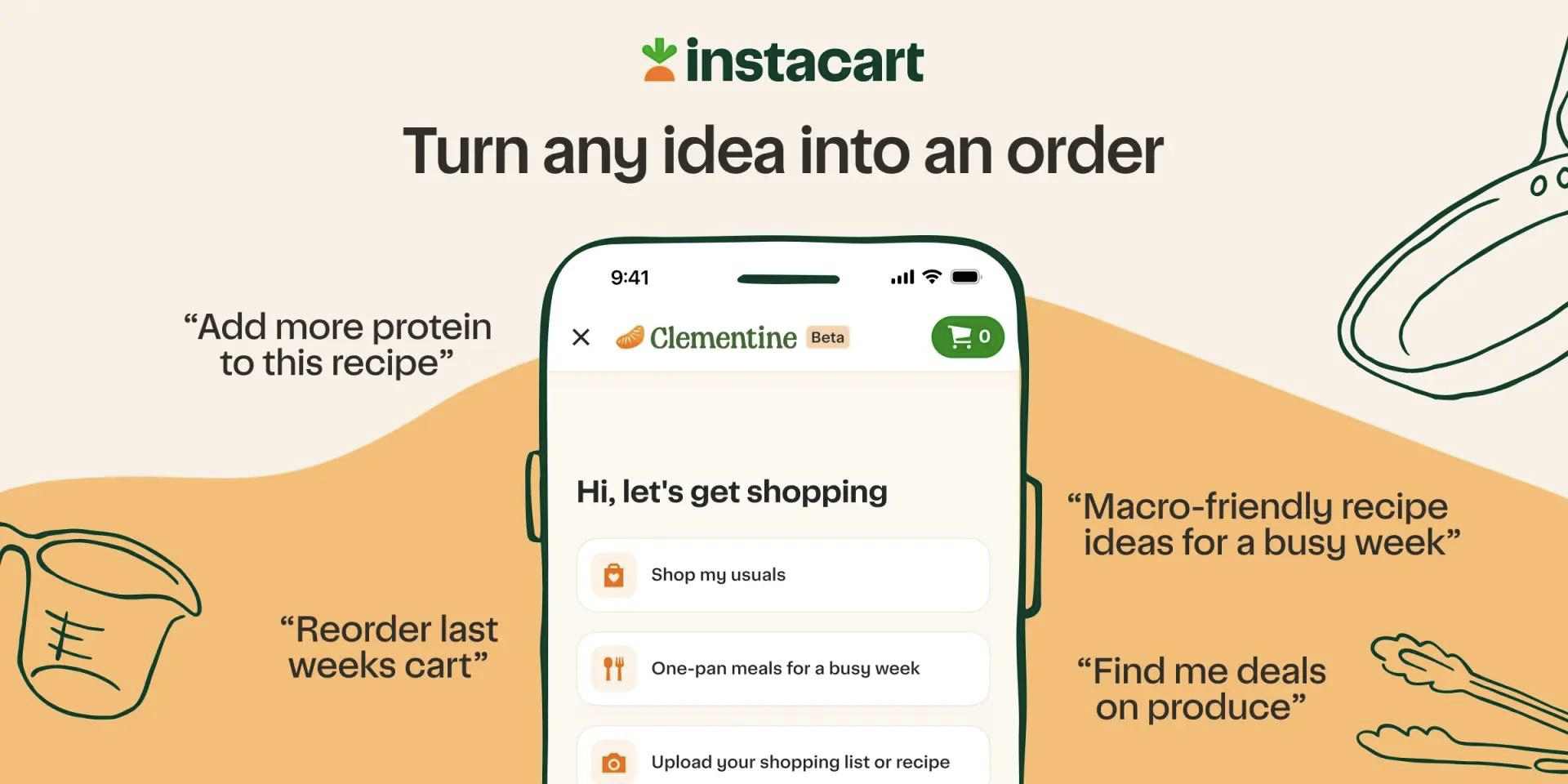
What Clementine can do:
- Dinner, sorted. Finding the right recipe shouldn't be half the work. Clementine handles it, generating personalized recipes on the spot or surfacing curated options from trusted publishers.
- Personalized to every household. Whether it's gluten-free, vegetarian, nut-free, or organic, Clementine suggests based on how a household actually eats. An expanded preference center lets customers set their choices once, and Clementine applies them across the experience.
- Savings without the work. Clementine can surface relevant deals and promotions and help customers find lower-cost alternatives, so shopping on any budget is easy.
- Reorder on autopilot. "Shop my usuals" or "restock my pantry staples" pulls from past order history to assemble a ready-to-buy list in seconds.
- Shop for any occasion. "Everything for a football watch party for 20 people" becomes a tailored list, based on brand preferences and dietary choices.
- Grocery list upload. Snap a photo of a handwritten list, or screenshot a digital one, and Clementine turns it into a list that can be added to cart in seconds.
Early results show that consumers are using Clementine to support their full weekly shop. Orders placed with the AI assistant are, on average, larger than Instacart’s typical basket — a signal that customers are using Clementine to plan more completely, not just shop more quickly.³
For a full look at how Clementine works, see Instacart's announcement.
Cart Assistant: the enterprise extension
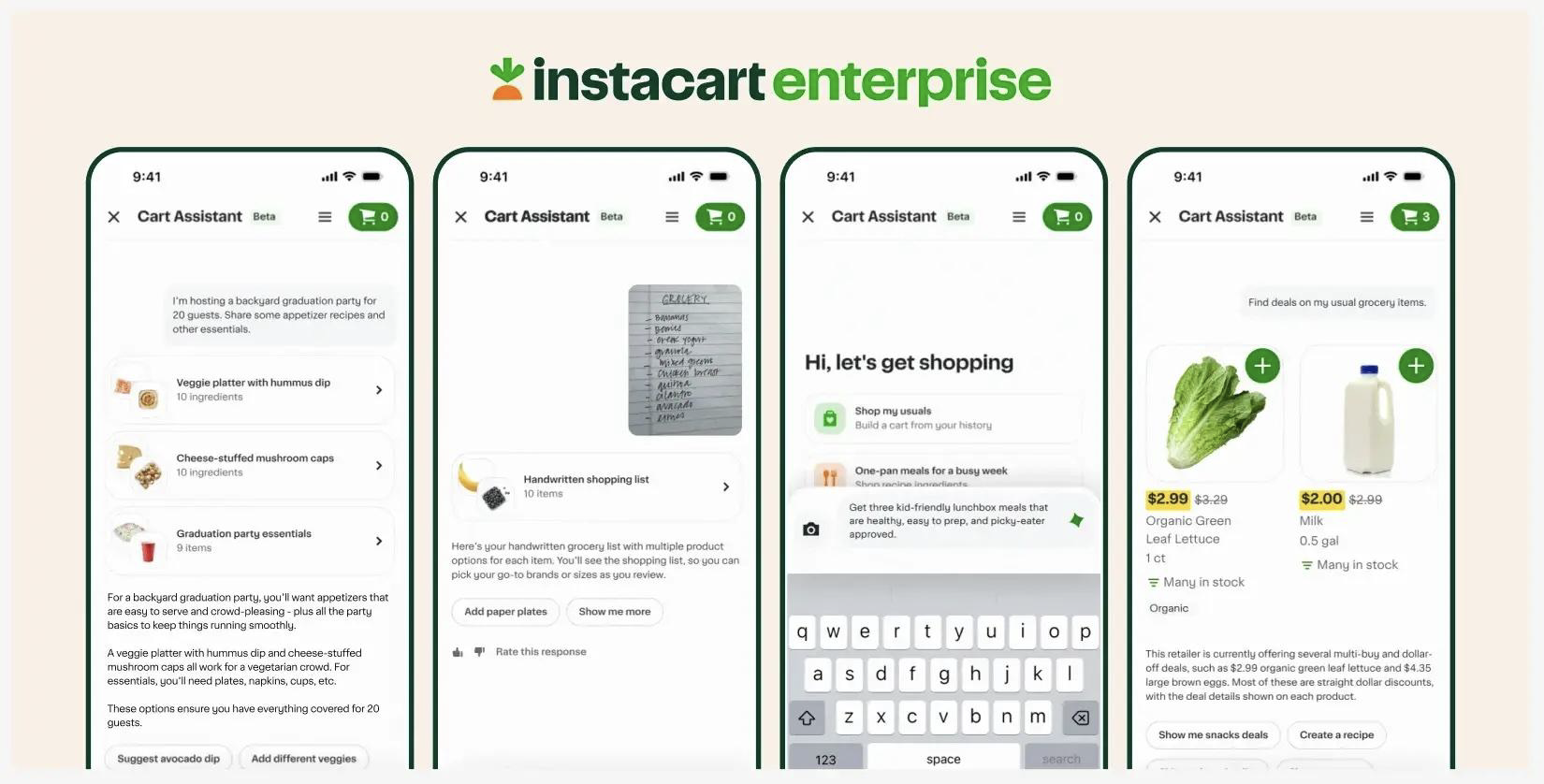
Clementine wasn’t the only AI-shopping assistant news from Instacart in September; Cart Assistant — the enterprise AI shopping tool built on the same underlying technology — is also gaining momentum among retailers. While Clementine operates within the Instacart Marketplace, Cart Assistant is designed for retailers who want to bring that same AI technology to their own branded websites and apps as a fully white-labeled experience.
Available to grocery retailers using Instacart's Storefront Pro platform, Cart Assistant is customizable: retailers can configure the agent's name, tone of voice, loyalty program integration, and recipe content to feel native to their brand. Food Bazaar, Heritage Grocers Group, and Woodman's are among the grocers already live with the technology, with ALDI U.S., Harmon's, The Save Mart Companies banner stores, and Stew Leonard's to follow.
"Instacart has been an enablement partner to grocers through every major shift in this industry, and our approach to AI is no different," said Ryan Hamburger, Chief Commercial Officer at Instacart. "We're proud to partner with retailers who recognize that AI is a competitive advantage they can deploy to better support and engage their customers."
Explore Instacart's AI solutions
Grocery retailers interested in learning more about Cart Assistant or Instacart's broader suite of enterprise AI tools can visit instacart.com/enterprise-platform/ai-solutions.
Sources
¹ Instacart-commissioned survey conducted by The Harris Poll, June 2–4, 2026, among 2,059 U.S. adults ages 18 and older. Full methodology available at instacart.com.
² All data are as of Q4 2025.
³ Instacart platform average order value and AI-assisted basket comparison as reported in Instacart's AI assistant announcement, June 2026.


No Comments Yet
Let us know what you think