Help Isom IGA recover from devasting floods
5 min read
Tariffs and Forced Labor: What Retailers Need to Know in 2026
Written by John Ross
Jul 30, 2026
Last week, the Trump administration announced new 10-12.5% tariffs on imports from 60 countries, covering most goods entering the United States. The administration argues that these countries have not done enough to prevent goods made with forced labor from entering global supply chains. The tariffs were implemented under Section 301 trade authorities after earlier, broader tariff programs faced legal challenges.
The administration argues that if a country allows products made with forced labor to enter international trade, American workers are forced to compete against artificially low labor costs."
Many of you many know that I am the coalition sponsor of the Human Rights Coalition within the Consumer Goods Forum (CGF), an industry association of retailers and manufacturers who work together to ensure a sustainable and just future for the global food industry.
The Human Rights Coalition helps global businesses understand their supply chain better; it helps them to understand the risks of child labor, forced labor, and human slavery in the food industry; and it provides resources for the biggest companies to isolate and remove suppliers who exploit the poorest, most vulnerable people in their markets.
Many people in developed nations are sometimes surprised to find that child labor, forced labor, even outright slavery still exist. 27.6 million people are exploited in some form of forced labor today, and that number is growing.
This includes debt bondage, where workers have to pay to get a job only to find out that what they make will never pay off the fee; underage workers, sometimes sold onto farms or fishing boats and forced to work; and state-sponsored forced labor.
Agriculture and fishing are the two largest industries that employ forced labor tactics in the world today. This is often because globalization has opened up lucrative markets in Third World countries where labor laws are loose and enforcement is non-existent.
But it is also in western nations. Right here in the U.S., workers pay brokers huge fees to be brought into the U.S. to work on orchards, farms, and meat processing plants. Once here they often find they can’t afford to pay off the loan the brokers charged to bring them into the country, often as legal seasonal workers, and end up essentially working as slave labor.
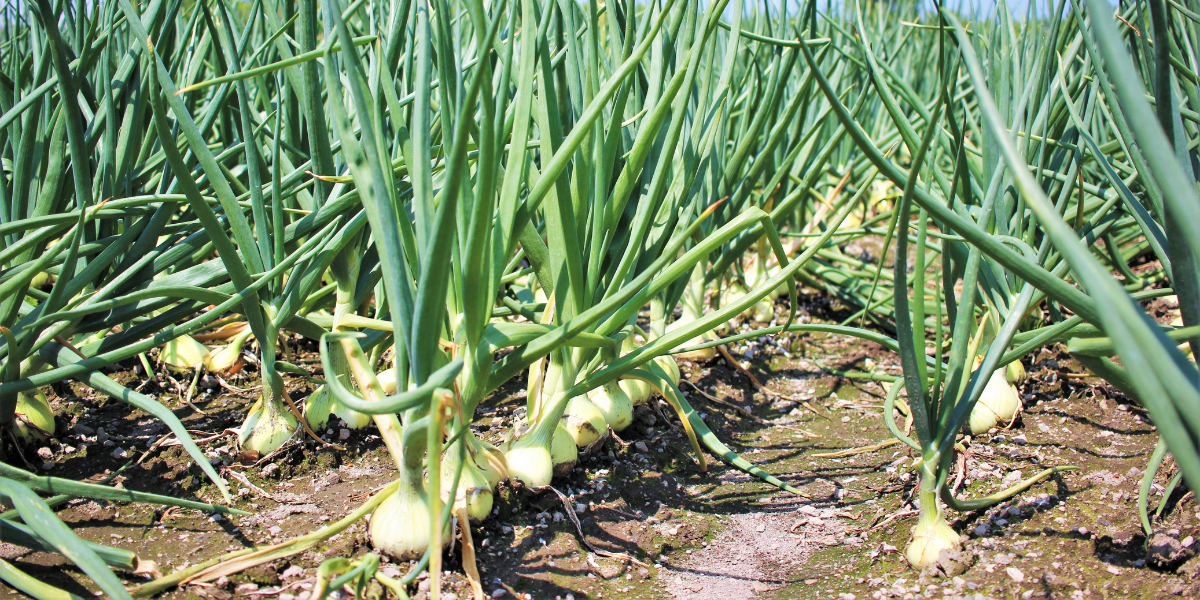
In the state of Georgia, slave labor was found in the Vidalia onion farms: laborers living in trailers with no running water or electricity, working the fields with no way to go home, and no way to pay off their debt. And they were mostly here legally! Federal investigators alleged that a criminal organization used the H-2A visa system to recruit workers from Mexico, Guatemala, Honduras, and other countries with promises of legitimate farm jobs only to be forced to work with no pay and no escape.
At IGA, and across the food industry, every company has policies that say they do not endorse the use of child- or forced-labor in their supply chains. But many companies don’t often know. Global supply chains are long, and have many suppliers, brokers, middlemen, and distributors. Just because a big global brand rejects these tactics doesn’t mean that the supplier of a supplier of a supplier isn’t exploiting vulnerable people for profit.
So, when the current administration announced sweeping tariffs on 60 trading partners, on the basis of human rights, that has to be a good thing, right?
The U.S. Trade Representative has explicitly linked the tariffs to failures by trading partners to stop imports produced with forced labor, arguing that forced labor creates an unfair cost advantage for global competition with U.S. companies. And it is true that when workers are trafficked, coerced, imprisoned, or otherwise unable to leave employment freely, labor costs can be dramatically lower than market wages.
The argument from U.S. policymakers is that products produced under these conditions can undercut manufacturers and farmers operating under normal labor standards. And if imported products to the U.S. are found to be made wholly or in part using forced labor, the U.S. has imposed massive fines, impounded cargos, and destroyed products.
The theory is that countries wishing to avoid tariffs will strengthen labor enforcement, improve supply-chain transparency, and crack down on forced labor.
Critics raise several objections. First, some countries with strong labor laws were still targeted. The European Union, Canada, Australia, and other developed economies already have substantial anti-forced-labor regulations. Some, like Australia, are far tougher on forced labor than here in the U.S.
Second, tariffs themselves have never been shown to directly eliminate slavery
Tariffs increase the cost of imports, but they don't necessarily improve conditions for workers on the ground. To truly stop exploitive labor practices, governments and commercial businesses need to work together to use a wide range of tools, including supply-chain audits, worker grievance systems, direct remediation programs, corporate due diligence requirements, and yes, import bans on specific products where child and forced labor occur.
As we have seen, importers pass tariff costs through the supply chain. That leads to higher prices for consumers and retailers, and in the short term, drive-up inflation. With a war in the Middle East, one in Europe, and now a new round of tariffs, many consumers will be pressured with price inflation.
What should IGA retailers take away from this?
For independent grocers, the most important implication is not the tariff itself but the growing expectation that companies need to better understand their supply chains.
The trend across governments, retailers, and consumer goods manufacturers is moving toward supply-chain traceability. To really end forced labor practices, we need to know where ingredients, packaging, seafood, produce, apparel, and general merchandise originate — and the means with which they were grown, fished, harvested, or produced.
At CGF I sat on stage with Australia's Coles CEO Leah Weckert. They are a big competitor to our 1,400+ Australian IGA’s stores, and we both compete with the even bigger retailer, Woolworths. The two of them collaborate on eliminating child- and forced-labor in their supply chains. And IGA follows suit.
That’s the three leading competitors in Australia, all sharing data on bad supplier practices, evidence of exploitative labor practices in farms and producers, and the willingness to fire suppliers who are identified as bad actors. There is a real lesson there for the rest of the world.
We have to pay attention to our supply chain. And when we look, and find things we don’t like, we have to be willing to act. It turns out that we have tremendous clout, and saying ‘no’ to producers or farmers who exploit other humans not only works, but it is the right thing to do.
But what about costs? Is the Trump administration correct that global suppliers are cheaper because they use slave labor? Is that true?
Partially. In the onion fields cases I mentioned earlier in my home state of Georgia, the farmers thought they were getting seasonal workers from legitimate brokers. They did have legitimate H2-A seasonal worker visas, and the farmers were paying the same costs they normally did for seasonal help.
The bad actors were the brokers who were pocketing the money that should have gone to the workers. This was one of the largest labor trafficking and forced labor investigations in U.S. agricultural history, and it shows how tricky it is to find where evil lurks. In this instance, eliminating the people exploiting the workers did lower costs, but it was almost negligible: less than a penny per onion.
So, the current policy to reduce human exploitation because it hurts farm competitiveness is probably overstated. But the fact that it brings to light the full extent to the problem is definitely a good thing.
There are still so humans in forced labor and debt bondage. From where I sit, any effort — no matter what the objective — that frees the most vulnerable is a good thing.
You May Also Like
These Stories on From the Desk of

Jul 22, 2026, 4:18:03 PM |
3 min read
Jul 13, 2026, 11:33:16 AM |
1 min read

Jun 18, 2026, 2:37:31 PM |
4 min read
No Comments Yet
Let us know what you think